
How trees cope with parasites
I try to keep the newsletter in tune with the changing seasons, but with my focus on Lymantria dispar moths I felt like I couldn't quite keep up, like they had come and gone so quickly that by the time I was starting to see their patterns and how they fit into the larger picture, all the doom and gloom of a leafless July canopy already seemed like a distant memory. To the keen-eyed naturalist, evidence of their early summer binge fest still peppers the land, from clusters of egg masses on the underside of branches to the rotting corpses of mated adults littered at the base of trees (see image below). So how did we get here, from bearing witness to the apocalyptic demise of our oaks to a seeming return to baseline? Read on!
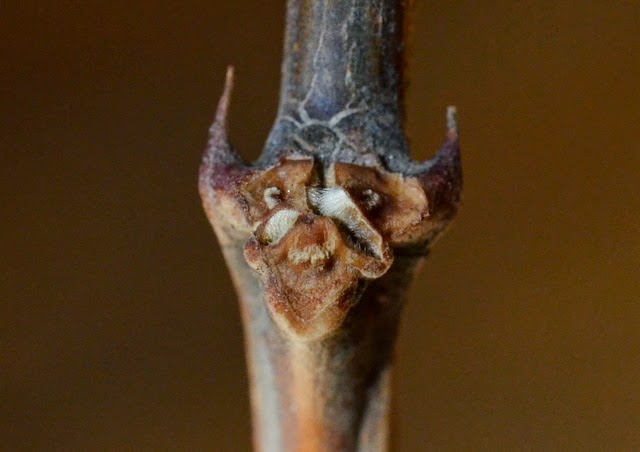
Dichotomous key (VII.d) – The world of internodes cont’d (Adornment)
Part of the twig key series: thorns, spines and prickles, and the other ways trees defend their twigs from browsing animals.
