
How hot is too hot?
There's something I love about running in the heat of the day, being in the full blaze of the afternoon sun, feeling the salt crystalizing on my skin. It seems to draw into clearer relief just how well-adapted our bodies are for the heat. Yesterday afternoon, I headed up to UVM's track to do mile repeats (a workout where I run 1 mile at my 10k pace, jog a lap and repeat for 4 miles). I did the same workout last week when it was almost 80º, and I was keenly aware of how much easier yesterday's workout felt. This wasn't all that surprising as it only takes 4-5 days to acclimate to the heat and it's been in the 80s since Saturday (and about 2 weeks to become fully acclimated; here's a great synopsis of what heat acclimation looks like for endurance runners). While I was running, I was thinking about my baseline body temperature and wondering how this compared to the lethargic squirrels and panting robins.

Plants with milky sap
The sap is flowing freely! The weather continues to warm, with nights consistently above freezing, which spells the end of sap production for maples
A Year In The Life Of Sap
The sap has been flowing intermittently the past couple weeks, and oh what a delight to hear that plunk plunk sound of the first drips hitting the bottom of an empty sap bucket. The sap slowly changes flavors across the sugaring season (more on that next week), but it also changes across the whole year. Here I’ll explain a bit about what’s in sap and how this varies from tree to tree.

Squirrels tapping Norway maple
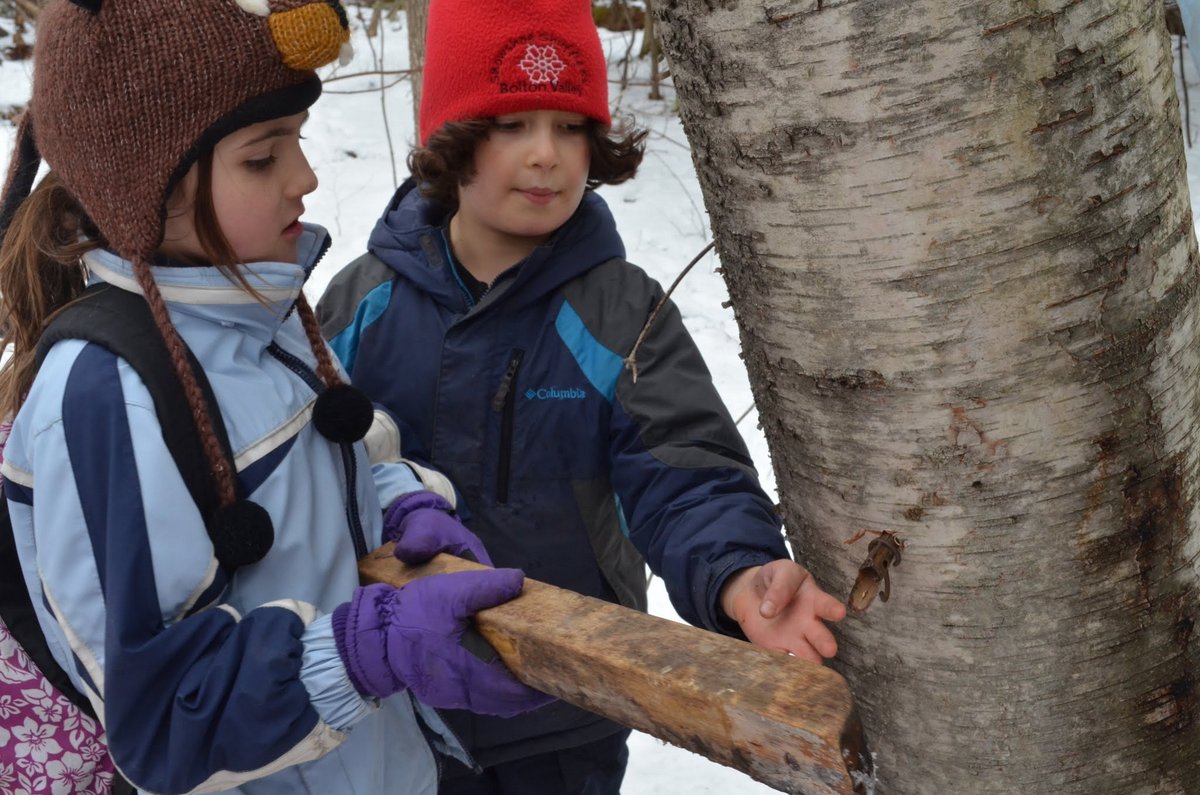
If spring is marked by the return of life to our somnolescent winter woods, then the flow of sap is really that first and most prominent signifier that spring is here! When I tapped trees with kids out at the Field School, I had one rule: No Sugar Maples. All trees have sap, even conifers, and many of them produce delicious sap that can be tapped in much the same way as sugar maple. And so it became an experiment to find new flavors, to figure out which trees have sap that floweth freely and when this sap flows. We took inspiration from yellow-bellied sapsuckers, which tap and eat sap from at least 174 different species across their range (more on how sapsuckers survive winter). Some species were a total bust and had no sap flow (e.g. musclewood, apples, black locust, tamarack, etc.). But some were incredibly delicious. Black walnut with its rich carmel-y flavor was easily my favorite, though I also enjoyed the birches.

That’s a lot of fur
A friend game me a challenge a bunch of years ago of finding any spot in the woods, sitting down, and not getting up until a I found a wild animal hair’s within arm’s reach. It was a great challenge, and on my first attempt took me about an hour to complete (it’s possible that the hair I found may have been one of my own). I often think about the ubiquity of lost hairs when out tracking animals in the woods, especially in the spring when some fur bearers molt. This weekend I came across a trail of deer tracks littered with fur and wondered just how hard this challenge is. So this week I’ll describe your odds of finding a deer hair in the woods and next week I’ll describe why deer hair is amazing.

On The Size Of Twigs
I’ve been working on a twig identification guide similar to the one I made for leaves. Admittedly, I’ve been having quite a bit of trouble organizing the guide. With leaves, it was a pretty simple and straightforward process to break down the trees into smaller groups based on leaf characteristics (like simple/opposite, teeth/no teeth, lobed/not lobed). But most people don’t give twigs much thought and twig characteristics (like bud scales, leaf scars) aren’t as familiar, obvious, or easy to see with the naked eye. I’m not going to go through the whole process of winter tree ID, but I did want to give a quick run down of how you can easily tell the ashes from maples in winter (both have opposite branches) and the ecological reason they appear different.
