
On The Size Of Twigs
I’ve been working on a twig identification guide similar to the one I made for leaves. Admittedly, I’ve been having quite a bit of trouble organizing the guide. With leaves, it was a pretty simple and straightforward process to break down the trees into smaller groups based on leaf characteristics (like simple/opposite, teeth/no teeth, lobed/not lobed). But most people don’t give twigs much thought and twig characteristics (like bud scales, leaf scars) aren’t as familiar, obvious, or easy to see with the naked eye. I’m not going to go through the whole process of winter tree ID, but I did want to give a quick run down of how you can easily tell the ashes from maples in winter (both have opposite branches) and the ecological reason they appear different.

How long do needles last?
A major advantage of being a conifer is being able to photosynthesize in the late fall and early spring, well after the deciduous trees have all shed their leaves. Some conifers, like white pines, only keep their needles for 2 growing seasons, while others hold onto their needles for well over a decade. In the last post we looked at how to estimate the age of twig. In this post, we'll use that information to estimate the age of a conifer's needles (needle longevity)!

Bud burst and aging twigs
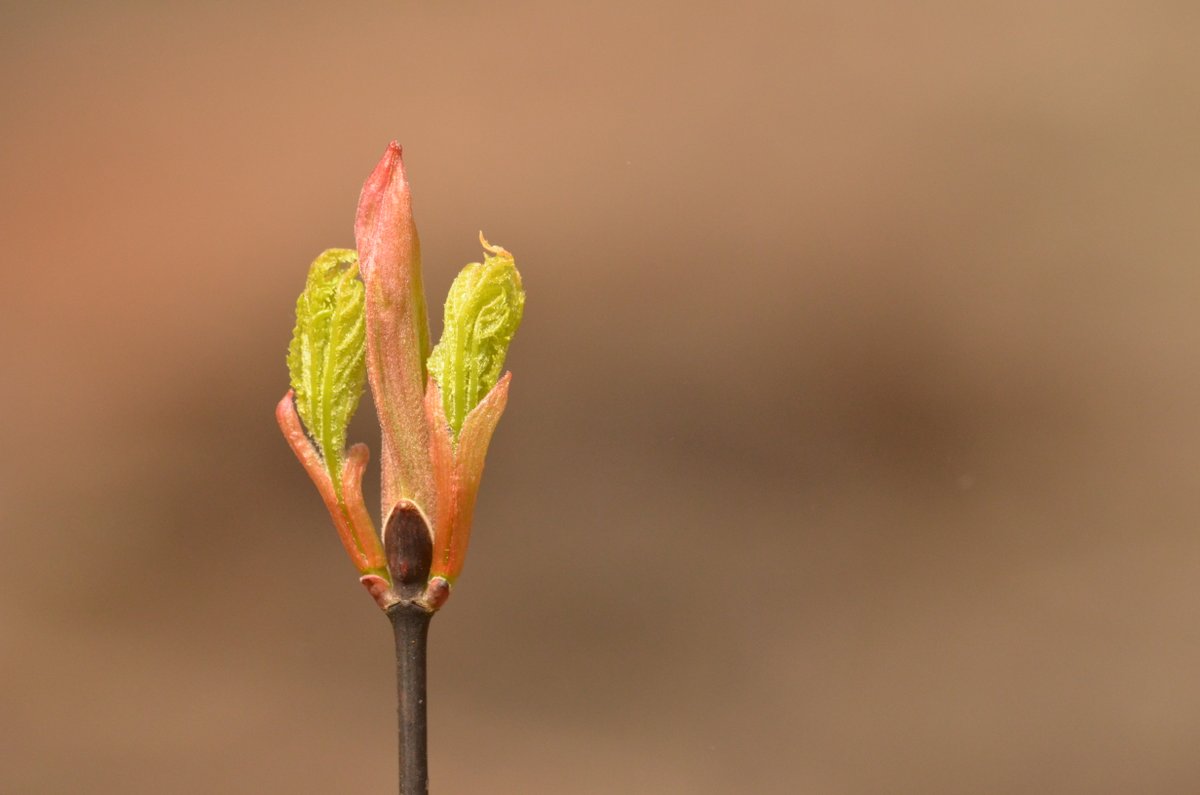
Spring is an exhilarating rush. In just a couple short weeks we went from a forest of sticks to a lush green canopy. The greenery has been hiding in dormancy, safely tucked away in buds that were formed sometime last summer. These buds, which are essentially just short branches, are typically covered in bud scales that protect the soft, embryonic leaves, stems, and occasionally flowers from cold temperatures and dry winds over the long winter months. Some buds, e.g. maples and ash, contain all of the leaves the branch will have the following growing season (this is called determinate growth), while others, e.g. elms and basswood, only have a starter kit and continuously develop new leaves throughout the growing season (indeterminate growth).
“Forcing” Twigs
I was going to press on with my series on conifer ID, but it felt like I was pretending that all was normal in the world, and it's anything but normal these days (but fear not, I'll pick up with it in a couple weeks). There's an overwhelming deluge of information on covid-19 flooding my inbox daily, and I thought that rather than expand on conifer minutiae or add to this by writing a naturalist's perspective on the pandemic, I'd offer you a reprieve from the overwhelming burden of staying informed by giving you a few simple ideas to engage and interact with the natural world while in self-isolation mode.

Signs of spring: Samaras
A germinated sugar maple seed at Ethan Allen Park, one of the subtler signs of spring, and how maples overwinter their seeds.

Marcescence in oaks
Why some oaks hold onto their dead leaves all winter, a look at marcescence and how trees normally drop their leaves.
