
Bark color as adaptation (pt 2)
Paper birch had the lowest temperature when exposed to the sun. It also has bright white bark and one of the farthest north distributions of any hardwood tree. Other white barked trees (e.g. quaking aspen, balsam poplar, and gray birch) also extend well into the boreal forest (see range maps below, if these don't show up, you can find them here) indicating that having white bark is a specialized adaptation for coping with extreme cold.

Bark color as adaptation (pt 1)
In looking at the results of my bark temperature study, it was clear that lighter colored bark had significantly cooler surface temperatures than dark colored bark. This was a fairly intuitive result as darker colors absorb more light and therefore heat up more while light colored objects (like snow) have a higher albedo and reflect most of the incoming light. At the extreme ends of the spectrum, when the air temperature was 91ºF, paper birch bark was just 118ºF while the much darker bark of staghorn sumac was 155ºF.

Bark temperature
Last week I was out teaching the Science of Trees, and we had a great time tinkering with different ways of studying trees. Of the different tools I brought in to illustrate various adaptations of trees, my highlights was measuring the temperature of bark in trees using an infrared thermometer. While I should probably be writing this in December and not during the hottest point on our planet in the last 200 years (more on why next week), I thought I'd share the results anyways because it's just so cool (pun intended)!

Black lights and Wood
I was recently listening to a podcast and the guest said that natural history is largely descriptive while ecology explores the reasons why things are the way they are. In my newsletters I've tried to blend the two worlds, taking descriptive observations I make out the field and texturing them with a layer of research. My research is often focused on the adaptive significance behind why something happens. It's interesting to know that beaver teeth grow at different rates throughout the year, but I'm more fascinated by the adaptive reasons for the variation. And in discovering the answers, I come to a keener sense of how my world operates.
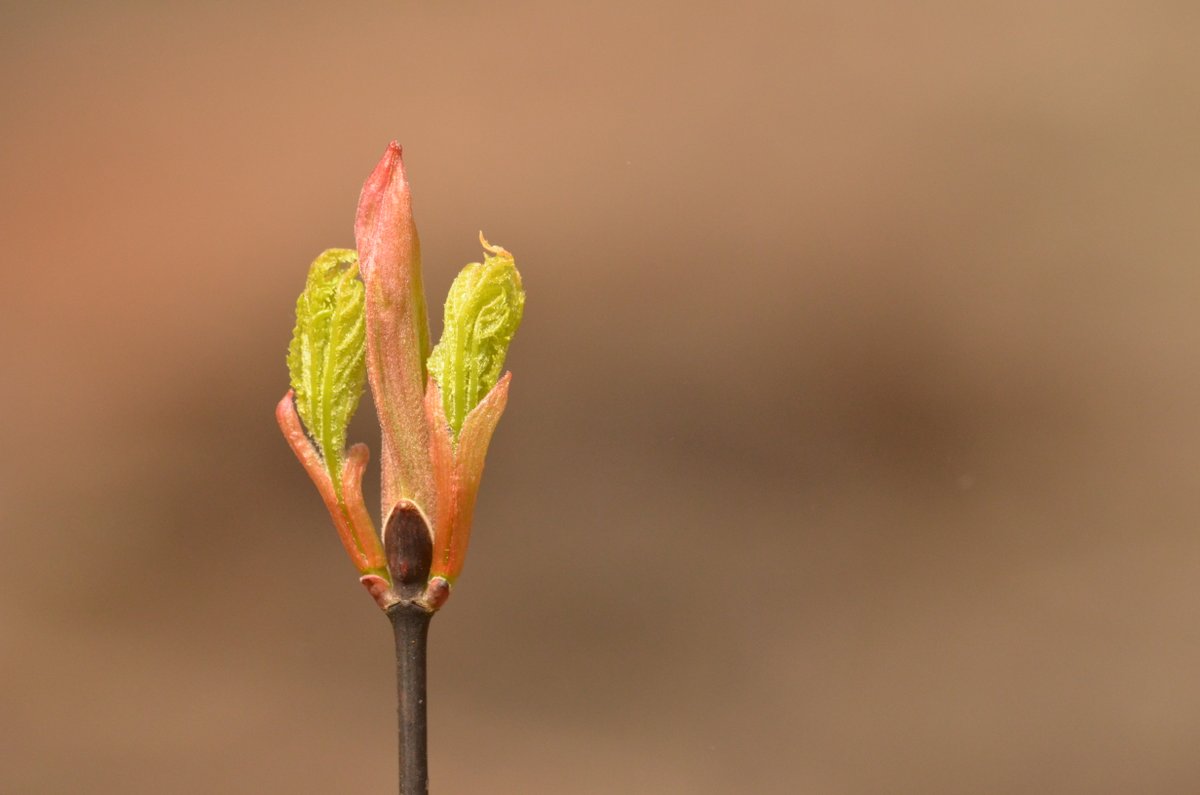
“Forcing” Twigs
I was going to press on with my series on conifer ID, but it felt like I was pretending that all was normal in the world, and it's anything but normal these days (but fear not, I'll pick up with it in a couple weeks). There's an overwhelming deluge of information on covid-19 flooding my inbox daily, and I thought that rather than expand on conifer minutiae or add to this by writing a naturalist's perspective on the pandemic, I'd offer you a reprieve from the overwhelming burden of staying informed by giving you a few simple ideas to engage and interact with the natural world while in self-isolation mode.

How much water do you consume in a lifetime?
While in Florida, I was mostly in Boynton Beach where the average elevation is just 15' above sea level. A series of canals run in perpendicular lines behind housing developments and under roads. Fountains and ponds and other reminders of water are everywhere. One day, while bobbing around in the pool, I was thinking about how much water I'd consume over the course of my life - specifically, could I consume the full volume of water contained in the pool. I did some back of the envelope calculations, my favorite kind of calculations, and came up with an answer.
