A Year In The Life Of Sap
The sap has been flowing intermittently the past couple weeks, and oh what a delight to hear that plunk plunk sound of the first drips hitting the bottom of an empty sap bucket. The sap slowly changes flavors across the sugaring season (more on that next week), but it also changes across the whole year. Here I’ll explain a bit about what’s in sap and how this varies from tree to tree.

Squirrels tapping Norway maple
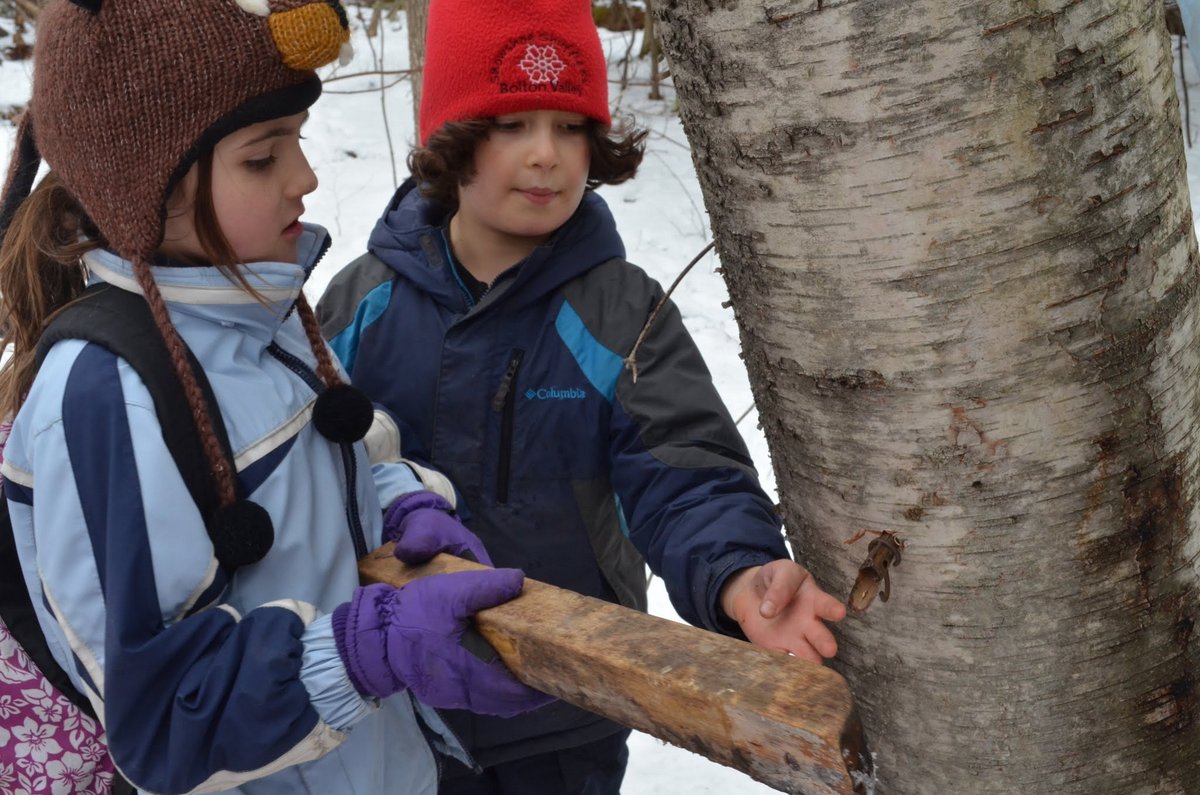
If spring is marked by the return of life to our somnolescent winter woods, then the flow of sap is really that first and most prominent signifier that spring is here! When I tapped trees with kids out at the Field School, I had one rule: No Sugar Maples. All trees have sap, even conifers, and many of them produce delicious sap that can be tapped in much the same way as sugar maple. And so it became an experiment to find new flavors, to figure out which trees have sap that floweth freely and when this sap flows. We took inspiration from yellow-bellied sapsuckers, which tap and eat sap from at least 174 different species across their range (more on how sapsuckers survive winter). Some species were a total bust and had no sap flow (e.g. musclewood, apples, black locust, tamarack, etc.). But some were incredibly delicious. Black walnut with its rich carmel-y flavor was easily my favorite, though I also enjoyed the birches.

On The Size Of Twigs
I’ve been working on a twig identification guide similar to the one I made for leaves. Admittedly, I’ve been having quite a bit of trouble organizing the guide. With leaves, it was a pretty simple and straightforward process to break down the trees into smaller groups based on leaf characteristics (like simple/opposite, teeth/no teeth, lobed/not lobed). But most people don’t give twigs much thought and twig characteristics (like bud scales, leaf scars) aren’t as familiar, obvious, or easy to see with the naked eye. I’m not going to go through the whole process of winter tree ID, but I did want to give a quick run down of how you can easily tell the ashes from maples in winter (both have opposite branches) and the ecological reason they appear different.

Snow Load On Trees
This winter has been pretty light on snowfall so far, and both last night’s snowfall as well as the previous snowfall last month came when the temperatures were hovering around 32ºF, which meant that the wet snow was sticky and eagerly clung to the branches of our trees. Unless it’s freezing rain, this isn’t much of a problem for our deciduous trees as the absence of leaves means that only a negligible amount of snow accumulates on the branches. This is partly because there just isn’t much tree for the snow to hold onto, but also because the snow doesn’t stay on the branches long. The open canopies allow wind to blow freely through the canopy and the branches create turbulence which quickly pulls snow free of the branches. But for conifers, snow load can be a significant problem in the winter.

Self-Fertilizing Plants
If you’ve ever sifted through fertilizers at a garden store, you’re likely familiar with NPK ratios. These elements - nitrogen (N), phosphorus (P), and potassium (K) - are the three biggies, the primary elements that all plants need. The first of these, nitrogen, is a key element in amino acids (the building blocks of proteins, enzymes, and DNA) and central to the photosynthetic macromolecule chlorophyll. When nitrogen levels in the soil are low, chlorophyll production is stunted and plant leaves pale to a sickly yellow. To compensate for low nitrogen levels, a plant will slow stem growth and put more resources into root development, allowing the roots to forage in the soil for limiting nutrients.

The Fall Rainbow: Green Islands
While summer weather is still here (the lake is 76.5 degrees here in Burlington), fall is poking its head into the green canopy. Over the next few weeks we'll be looking at the rainbow of fall, though out of ROYGBIV order. This week we focus on the what happens when things go wrong with leaf senescence.
