The size of a tree (part 3)
Alright, I really hope you got here with me, as this is some pretty fun stuff. I know it’s math and acronym heavy (and cute animal light), but I find it deeply satisfying to quantify some of the more intuitive things about trees. With a couple more calculations, we can paint a very cool picture of the difference between sugar and striped maples. And then we can move on to sword-bearing coneheads!

The size of a tree (part 2)
We're picking up where we left off (here's part 1), with two trees of similar stature, though each with vastly different numbers of leaves. Our sugar maple comes in at 1,060 leaves, while our striped maple has just 306. At first glance, this seems like a significant difference, but striped maple leaves are gigantic while sugar maples, well, aren't. So we need a better way to compare these two numbers. Here I want to figure out two things: first which tree takes up more space in the canopy and second, which tree has more photosynthetic surface area. And next time we'll look at some of the differences in the life history strategies of striped vs sugar maple.

The size of a tree (part 1)
There’s nothing I love more than some back of the envelope calculations. And guessing games. Love those too. And I suppose the only thing better than either one of those is the intersection between guessing games and some fuzzy math! In this issue, we'll look at some guessing games, and next week we'll use the answer to estimate the size of a tree.

Plants with milky sap
The sap is flowing freely! The weather continues to warm, with nights consistently above freezing, which spells the end of sap production for maples
A Year In The Life Of Sap
The sap has been flowing intermittently the past couple weeks, and oh what a delight to hear that plunk plunk sound of the first drips hitting the bottom of an empty sap bucket. The sap slowly changes flavors across the sugaring season (more on that next week), but it also changes across the whole year. Here I’ll explain a bit about what’s in sap and how this varies from tree to tree.

Squirrels tapping Norway maple
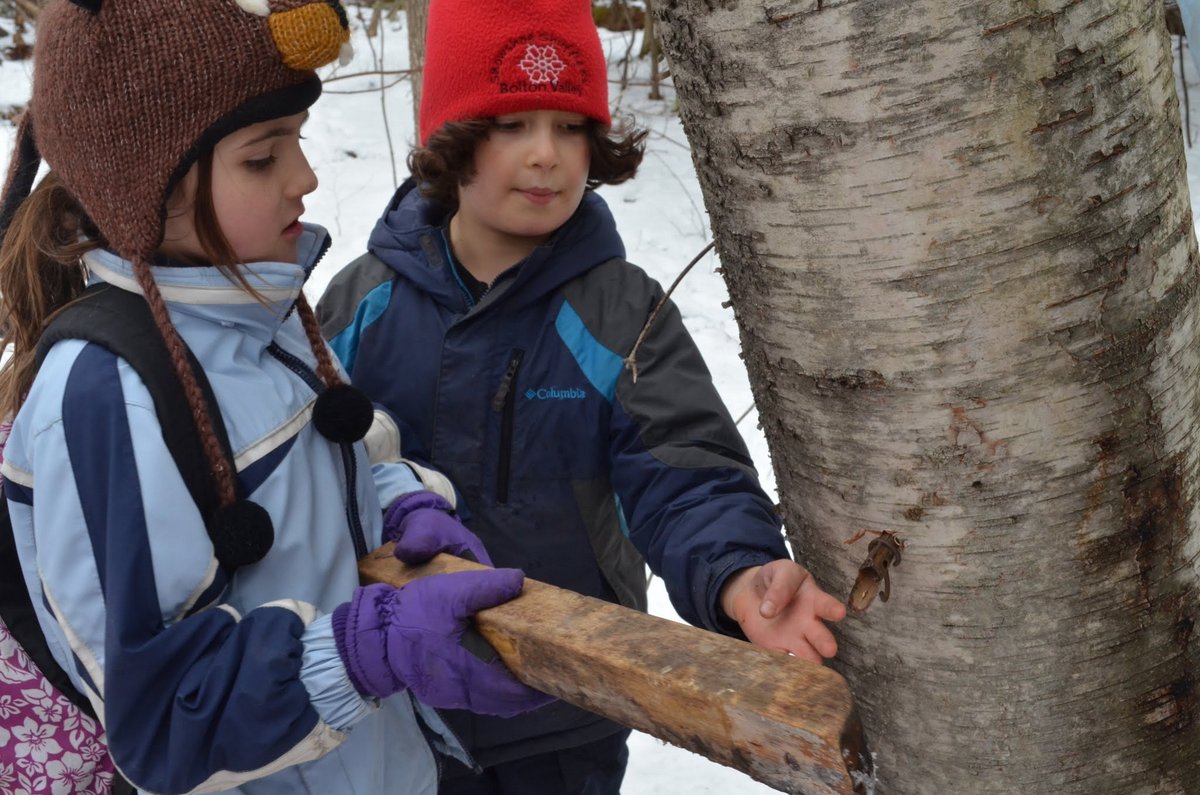
If spring is marked by the return of life to our somnolescent winter woods, then the flow of sap is really that first and most prominent signifier that spring is here! When I tapped trees with kids out at the Field School, I had one rule: No Sugar Maples. All trees have sap, even conifers, and many of them produce delicious sap that can be tapped in much the same way as sugar maple. And so it became an experiment to find new flavors, to figure out which trees have sap that floweth freely and when this sap flows. We took inspiration from yellow-bellied sapsuckers, which tap and eat sap from at least 174 different species across their range (more on how sapsuckers survive winter). Some species were a total bust and had no sap flow (e.g. musclewood, apples, black locust, tamarack, etc.). But some were incredibly delicious. Black walnut with its rich carmel-y flavor was easily my favorite, though I also enjoyed the birches.