
Fall Is Back (Marcescence)
The act of shedding leaves is an active process. In the late fall, as daylength shortens and temperatures drop, the twig begins a three stop process as it prepares to for winter. First, nutrients and stored starch in the leaf start to break down and get piped back down into the twig. Second, the twig creates what's called an abscission layer. A layer of cork cells on the branch side of things are laid down to plug up and protect the site where the leaf falls off. Third, on the leaf side of things, the cells begin to kill themselves off (apotosis) so that the leaf can cleanly fall away from the branch without tearing off any of the bark on the twig.

Black lights and Wood
I was recently listening to a podcast and the guest said that natural history is largely descriptive while ecology explores the reasons why things are the way they are. In my newsletters I've tried to blend the two worlds, taking descriptive observations I make out the field and texturing them with a layer of research. My research is often focused on the adaptive significance behind why something happens. It's interesting to know that beaver teeth grow at different rates throughout the year, but I'm more fascinated by the adaptive reasons for the variation. And in discovering the answers, I come to a keener sense of how my world operates.

Wolf Trees
It's a common sight in New England - you're walking through a young, scraggly forest and then in the distance there's a tree as though from an ancient and distant land. A single stumpy trunk that promptly splits into multiple large, gnarled branches that extend out and up. You have some sense that the cells at the heart of the tree - if they have not yet rotted away - were laid down before any voices could have wondered out loud in French or English whether or not to cut the tree down.

Love Trees
One of our patrons, Nina Jaffe, sent me the photos below and wrote: “I snapped both of these pics in the [Jericho] UVM Research Forest…the beech on the left this past Sunday and the hemlock (I believe) back in Sept. 2012. How does this phenomenon occur?” So I thought I’d follow up with some info on how these “love trees” form.

Heat Stress in Plants
I'll start this newsletter the way I started the last one: It's been hot. Real hot. And while we've had a few warm days earlier in the season, this is the first real stretch of heat for the year. Record breaking heat. When the weather's hot, it can be a real source of stress for organisms. Read on for why heat's a problem and how plants solve the problem!
Stinky Plants
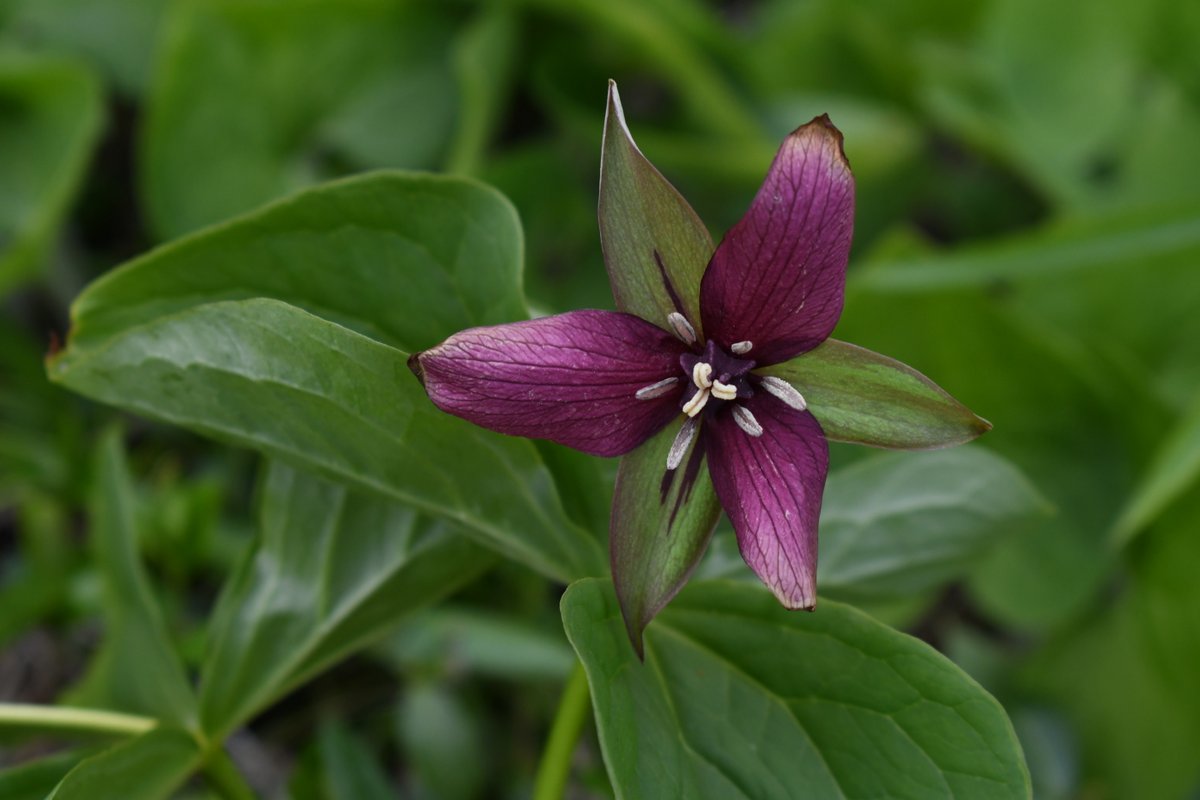
Generally speaking, animal-pollinated (zoophilous) flowers are more effective at effecting the transfer of pollen than wind (anemophilous) because they rely on animals to take pollen directly to another - and hopefully - receptive flower rather than relying on chance. But with all mutualisms, there's a trade off, and flowers must produce enough nectar to entice pollinators into spending enough time buzzing around their flower to pick up stray pollen grains. They then walk, fly, or buzz directly to another flower, often of the same species, bringing pollen right from plant A to plant B (interestingly, most plants have individual flowers or entire individuals within the population that cheat the system and are entirely nectarless). To advertise that nectar is present and ripe for the taking, flowers are often bright, showy, and/or fragrant.
